

Article: Why Amethyst Turns Purple
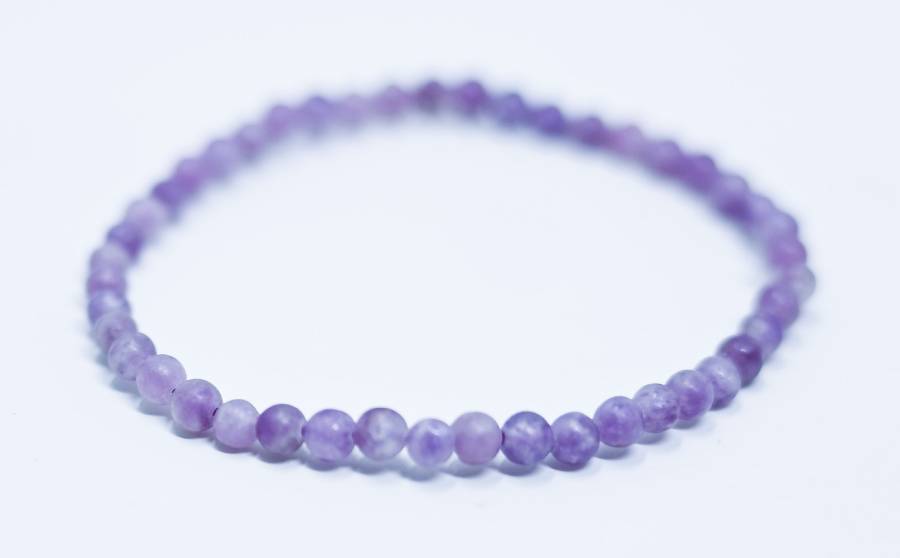
Why Amethyst Turns Purple
The purple in amethyst comes from trace iron sitting in quartz, plus natural background radiation working on that iron. Once you know that, a lot falls into place: why bracelet beads run anywhere from pale lilac to deep violet, and why faint bands or lighter patches show up along one strand. Variation comes with how the material formed. It isn't automatic proof that something is wrong.
Key Takeaways
- Trace iron and background radiation give amethyst its familiar purple color.
- Pale and deep purple shades can both occur naturally in bracelet beads.
- Color zoning can create lighter bands or darker areas within one bead.
- A darker bead isn't automatically better for a bracelet.
Lay an amethyst bracelet flat on a table and you might notice one bead sitting lighter than the rest. Another shows a soft stripe, or a deeper patch crowding its edge. That can catch you off guard if the strand looked evenly purple when you first picked it up.
There's a physical reason behind them. If you're looking at amethyst crystal for sale, remember that the color developed inside quartz underground. Nobody painted an even coat across every future bracelet bead.
Iron and Radiation
Amethyst is quartz carrying trace amounts of iron in its crystal structure. Natural background radiation alters that iron, the altered iron changes how the quartz absorbs light, and what you end up seeing is the purple amethyst is known for. All of this happens inside the material, which is why one bead on a strand can carry color that developed a little differently from the bead right next to it.
Pale Lilac to Deep Violet
Very pale lilac at one end, intense violet at the other. A bracelet will reflect that range whenever its beads were cut from material of differing color depth. So when you browse amethyst crystal for sale, expect natural amethyst to show you more than one flat catalog shade.
- Pale beads can look lilac in daylight.
- Medium purple often remains visible indoors.
- Deep purple can look nearly black in dim rooms.
Zoning in Beads
Zoning is the word for lighter and darker purple areas sitting inside one piece of amethyst. Cut a bead from zoned material and you may get a lighter band, a darker edge, or a shade that shifts gradually as the bracelet turns on your wrist.
- A pale band may cross part of one bead.
- Purple may gather more strongly near an edge.
- One bead may look clearer beside the next.
Beads and Tumbled Stones
A tumbled stone and a bracelet bead can show the same pale-to-deep range, since both were shaped from amethyst. Size changes what you notice. Zoning is easy to spot across a larger tumbled stone, while a small polished bead may give you only a quick flash of lighter or darker purple as it swings.
Darker Beads and Quality
Darker doesn't mean better, not on its own. Strong saturation appeals to plenty of people, but push it far enough and the bead loses brightness, reading as black in a dim room. What a search for amethyst crystal for sale should lead you to is a shade you actually enjoy wearing, not a rule that deep purple always signals higher quality.
Protecting the Color
Heat and prolonged strong light can alter amethyst's color over time. Keep an amethyst bracelet away from extreme heat, and avoid leaving it in constant direct sun when it isn't being worn. A drawer or jewelry dish works well for everyday storage.
Suppose one bead seems lighter than the others. Carry the bracelet over to a window before you draw any conclusions, because indoor lighting can make purple beads appear much darker than they do in daylight.
What to Do Next
A lighter bead, a faint stripe, a deeper purple patch: each of those reflects how the amethyst formed. Once you know trace iron and natural radiation shaped the color, the small differences across a bracelet start to make sense.
If you'd like to compare shades and see how bracelet beads look together, Crystalis Treasures in Herndon, VA can help you examine them up close. Visit the shop and ask to compare the beads before choosing your bracelet.

